

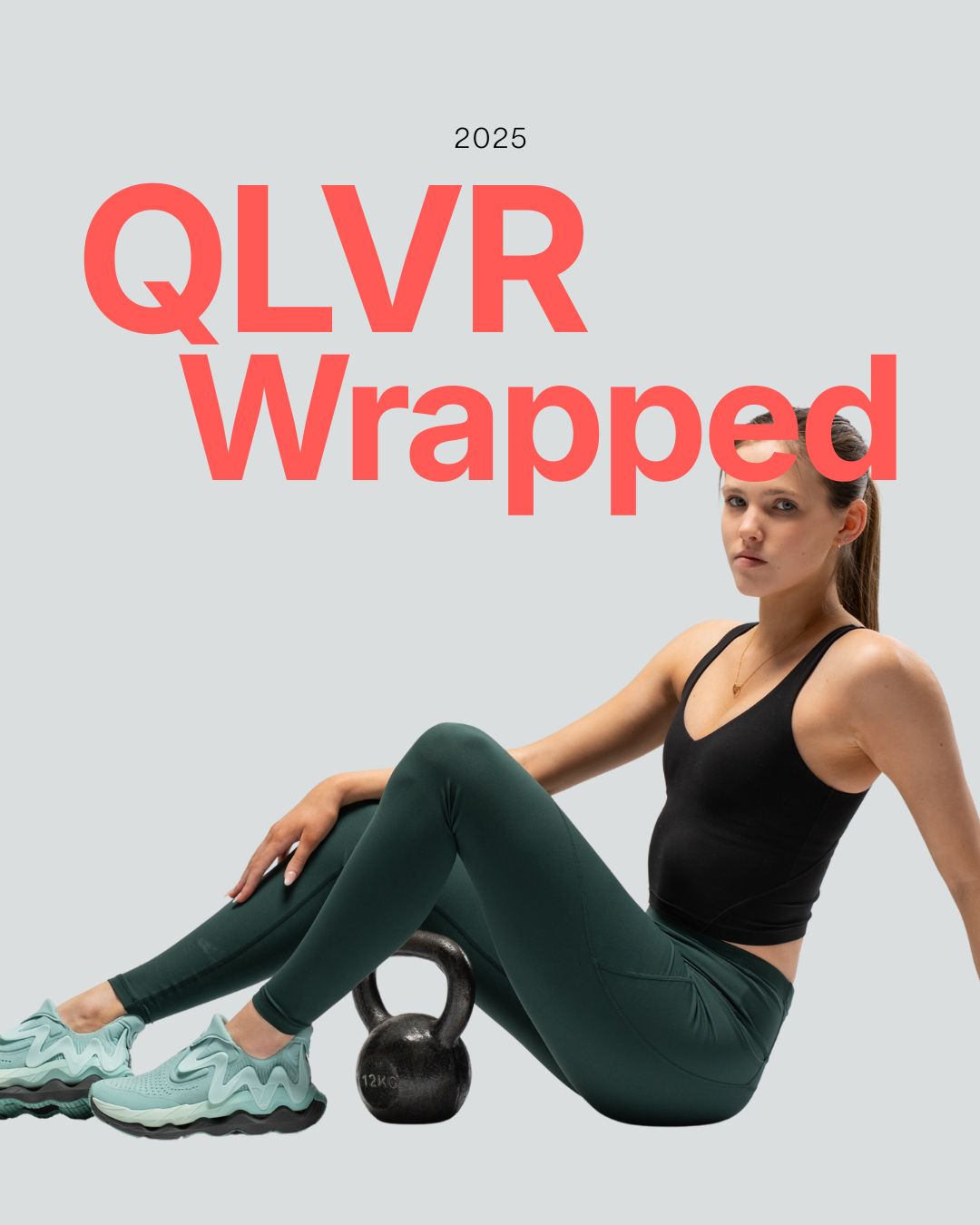
This time last year, QLVR was still in production.
The idea was fully formed. The prototypes had been tested, retested and refined. But the biggest question remained unanswered:
What would happen when women finally tried a performance shoe designed specifically for them?
In 2025, we found out.
This was the year QLVR stepped out into the world—from workshops and warehouses to festivals, try-ons and everyday training sessions. We’ve been tracking the numbers, but what matters most is what those numbers represent: proof that when you design properly for women, everything changes.
Here’s what our first year on the market taught us.
38 Countries. One Clear Signal.
In our first year, QLVR reached women all over the world.
That growth didn’t come from big-budget advertising or mass distribution. It came from something far more telling—women talking to other women after trying something that felt genuinely different.
From the UK to Europe, Australia to the US, QLVR travelled through word of mouth, social sharing and in-person experiences. The takeaway was clear: the problem we’re solving isn’t niche. It’s global.
Women everywhere have been adapting to footwear that wasn’t designed for them—and they recognise instantly when something finally is.
9 Out of 10 Women Bought After Trying
This is the stat we keep coming back to.
At events and festivals, women stepped into QLVR for the first time—often with healthy scepticism. Laceless performance footwear is unfamiliar. A “running slipper” sounds, on paper, like it might be too good to be true.
And yet, 9 out of 10 women who tried QLVR went on to buy.
Not because of branding. Not because of hype. But because of fit.
When a shoe is built on a women-specific last—with a narrower heel, wider toe box and higher arch support—the difference is immediate. Add our Wing Fit collar that secures the foot without laces, and the experience explains itself.
This wasn’t persuasion. It was validation.
Three Festivals. Hundreds of Try-Ons. Real Conversations.
In 2025, QLVR showed up in real life.
Across three festivals, we invited women to try the shoes properly—to walk, move, squat, lift and run in them. These weren’t controlled lab tests. They were honest, unfiltered moments.
What we heard again and again:
“That’s clever.”
“I’ve never felt that before.”
“The fit is unbelievable!”
Those conversations shaped how we talk about QLVR today. They confirmed what years of development suggested: women don’t need convincing. They need access.
Why Laceless Actually Matters
Laceless wasn’t a styling decision. It was a design question.
We started by looking at how women actually put their shoes on and take them off—often mid-task, mid-life, hands full. Laces had become an unquestioned default, not because they were ideal, but because no one had challenged them.
The result was a system that allows the foot to step in easily, then lock securely in place once weight is applied. Fast, consistent, supportive.
In 2025, hundreds of women retired their laces—not because it was trendy, but because it worked better. Convenience didn’t replace performance. It finally caught up to it.
What the Numbers Really Tell Us
The stats matter. But they’re not the point.
What they tell us is this:
-
Women notice when products are designed properly
-
Performance and convenience don’t have to compete
-
Women-first design isn’t a trend—it’s overdue
2025 was the year QLVR moved from idea to evidence.
Looking Ahead
As we move into 2026, we’re not chasing growth for growth’s sake. We’re doubling down on what worked—thoughtful design, real-world testing and listening closely to the women who wear QLVR every day.
Thank you to everyone who tried QLVR, shared QLVR or simply believed that athletic footwear could be better.
Same time next year?
Share:
Tested & Already loved by so many
Our 2026 Commitments: What We’re Moving Towards (And What We’re Leaving Behind)